Gold and UK Tax
Tax on Gold in the UK
Tax on gold in the UK depends on the exact product you buy and what happens when you sell it. This guide explains VAT on investment gold, Capital Gains Tax on bullion, and the 2026-27 allowance and rates.
At a glance
How is gold taxed in the UK?
Qualifying investment gold is exempt from VAT in the UK, and UK sterling legal-tender gold coins such as modern Sovereigns and gold Britannias are exempt from Capital Gains Tax. Gold bars and non-sterling coins such as Krugerrands can be VAT exempt at purchase while still being chargeable for CGT when sold. For 2026-27 the annual exempt amount for individuals is £3,000 and the main CGT rates are 18% and 24%.
- VAT and Capital Gains Tax are separate rules. A product can be VAT exempt at purchase and still chargeable for CGT at sale.
- Qualifying investment gold is VAT exempt, covering bars of at least 995 fineness and coins meeting HMRC's definition.
- HMRC treats Sovereigns minted from 1837 and gold Britannias as sterling currency, so gains on them are exempt from CGT.
- Gold bars and non-sterling coins such as Krugerrands remain chargeable assets for Capital Gains Tax.
- For 2026-27 the annual exempt amount is £3,000 and the main individual CGT rates are 18% and 24%.
- Physical silver generally carries the standard 20% VAT rate when supplied for delivery in the UK.

Written by
Richard Lyttle leads Bullion House across product standards, customer experience, and educational review. He reviews high-trust buying guidance so customers can understand physical gold, tax-sensitive product features, and resale considerations before they buy.
Reviewed by Richard Lyttle on 7 Oct 2026

On this page
Tax on gold in the UK depends on what you buy, how you hold it and what happens when you sell it. For private investors, the two main taxes to understand are Value Added Tax (VAT), which can affect the purchase of physical precious metals, and Capital Gains Tax (CGT), which can apply when an asset is sold for a profit. The rules aren't the same for every type of gold, and the tax treatment of gold can differ from that of silver.
For many investors, qualifying investment gold has a particularly favourable VAT position. HMRC exempts qualifying investment gold from VAT, while certain UK legal-tender gold coins also benefit from an exemption from CGT. This means the type of coin or bar you buy can have tax implications later, even if two products contain a similar amount of gold.
Tax shouldn't be the only factor when choosing bullion. Premiums, gold content, liquidity, storage, and the price you may receive when selling all affect the overall cost of an investment. At Bullion House, we help customers understand the product they are buying and its practical resale considerations, while HMRC remains the appropriate source for the tax rules themselves.
How is gold taxed in the UK?
There are two main questions regarding tax on gold in the UK for someone buying bullion.
- Is VAT charged when I buy it?
- Could I have to pay CGT when I sell it?
These questions need to be considered separately. VAT is concerned with the supply of goods or services, while CGT is concerned with gains made when chargeable assets are disposed of. A product can therefore be exempt from VAT when you buy it without automatically being exempt from CGT when you sell it.
This is one reason it's worth checking the precise product rather than assuming that all gold bullion receives the same tax treatment.
VAT on gold
When is gold exempt from VAT?
HMRC provides a specific VAT exemption for investment gold. Under VAT Notice 701/21, investment gold includes qualifying gold bars and wafers with a purity of at least 995 thousandths and a weight accepted by the bullion markets. Certain gold coins can also qualify.
For a gold coin to meet the general definition of investment gold, HMRC states that it must have been minted after 1800, have a purity of at least 900 thousandths, be or have been legal tender in its country of origin, and normally be sold for no more than 180% of the open-market value of the gold it contains. HMRC also maintains a list of investment gold coins that qualify for the exemption.
The exemption means a UK dealer doesn't add the standard 20% VAT to a qualifying supply of investment gold. HMRC's current standard VAT rate is 20%, so the exemption can make a significant difference to the initial cost of physical bullion.
Gold bars and VAT
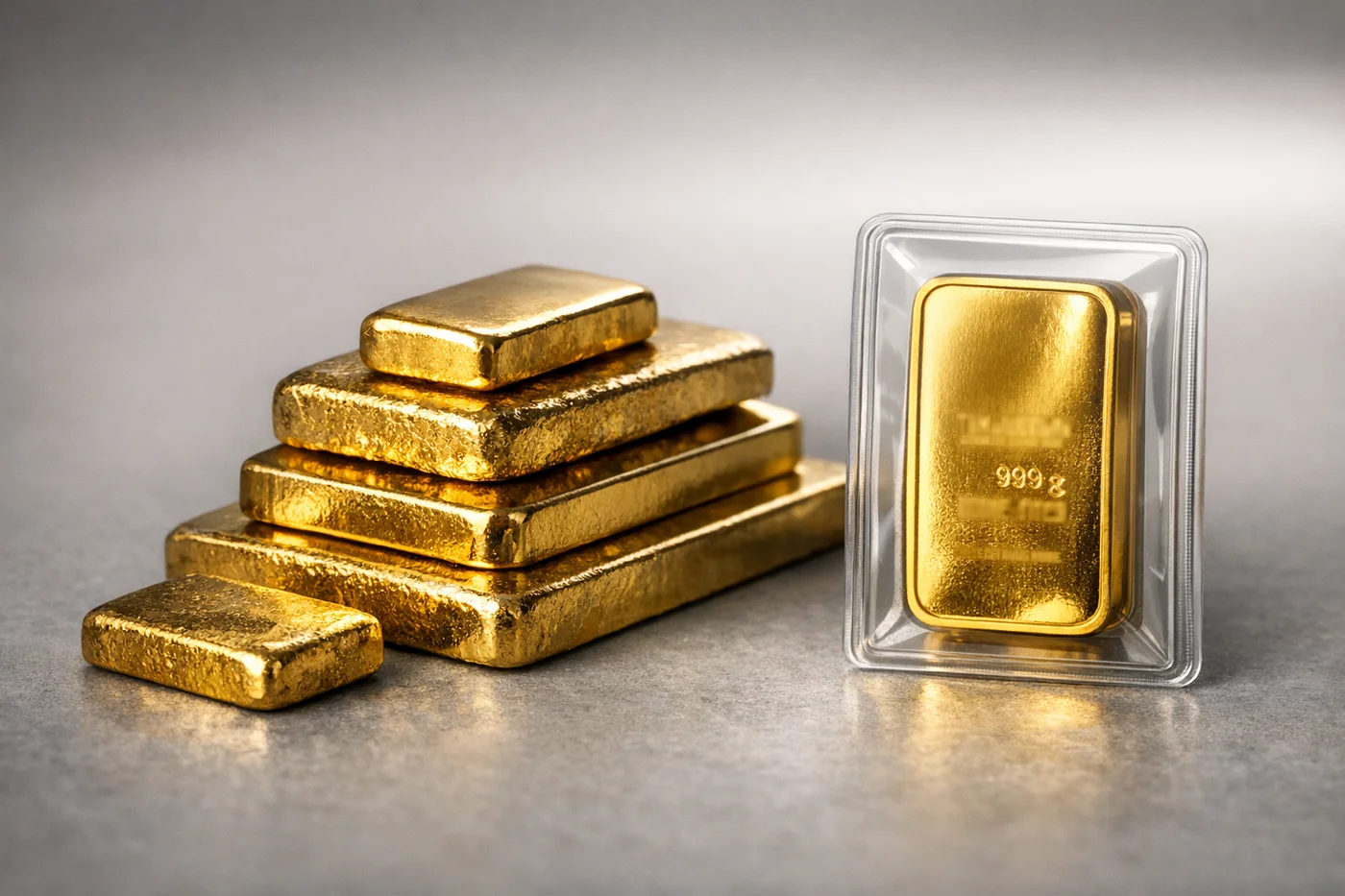
Gold bars can qualify for VAT exemption when they meet HMRC's investment-gold definition. The general purity requirement is at least 995 thousandths, or 99.5% gold, and the bar must be of a weight accepted by the bullion markets. A bar isn't VAT exempt simply because it's described as bullion. It must meet HMRC's specifications.
When buying a bar, keep the invoice and product information showing the refiner, weight and fineness. These records can also help if you later need to calculate a gain.
Gold coins and VAT

Many widely traded gold bullion coins qualify as investment gold for VAT purposes, provided they meet HMRC's requirements or appear on its relevant list.
The VAT position shouldn't be confused with CGT treatment. A foreign gold coin may be VAT exempt as investment gold while still being chargeable for CGT.
VAT on silver in the UK
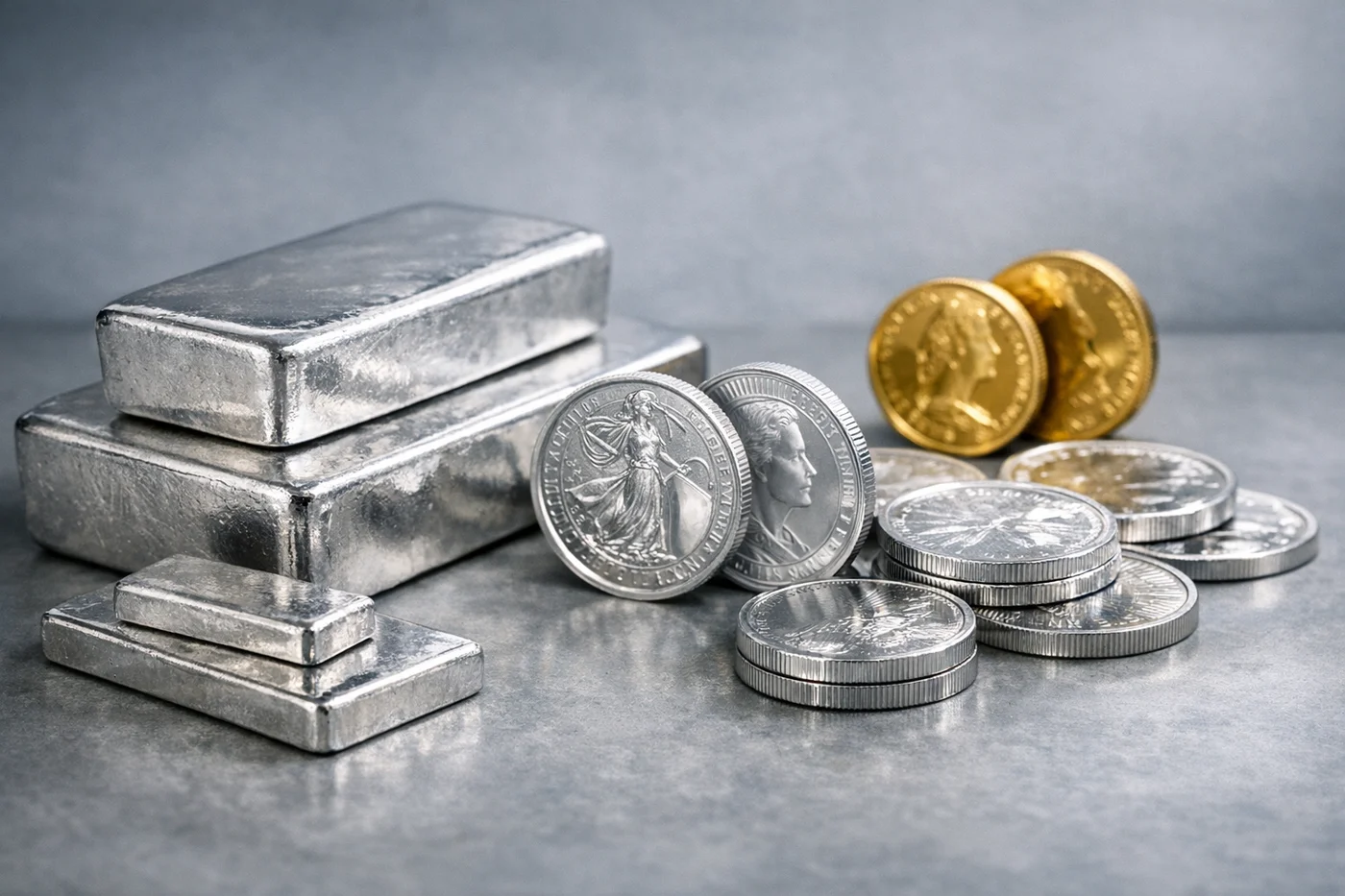
Silver is treated differently from qualifying investment gold. There is no equivalent blanket investment-silver VAT exemption in the UK.
The standard VAT rate is currently 20%, and physical silver supplied for delivery in the UK will generally be subject to VAT unless a specific rule applies. This can significantly affect the amount paid above the underlying silver value.
When comparing silver products, look at the complete purchase price rather than the silver's spot value alone.
Does VAT apply to silver coins?
Physical silver coins supplied for delivery in the UK are typically subject to the standard VAT treatment unless affected by a specific rule.
Silver coins shouldn't automatically be treated like gold investment coins. HMRC's investment-gold exemption is specific to qualifying gold and doesn't create a general exemption for silver. For a normal retail purchase, check the final price and VAT treatment before comparing products.
Capital Gains Tax on gold
What is Capital Gains Tax?
Another significant issue regarding tax on gold in the UK is whether Capital Gains Tax applies when you sell your gold bullion. Capital Gains Tax is generally charged on the profit made when you dispose of a chargeable asset. A disposal can include selling an asset, giving it away, or transferring it in certain circumstances.
If you buy a chargeable gold bar for £5,000 and later sell it for £7,000, the starting point is a £2,000 gain. The calculation can then take account of allowable costs, losses and any available annual exempt amount before determining whether CGT is due.
HMRC's guidance explains that CGT is based on overall gains for the tax year after allowable losses and reliefs have been taken into account.
Not every gold product is necessarily a chargeable asset, however. This is particularly important when considering UK legal-tender coins.
The 2026–27 Capital Gains Tax allowance
For the 2026–27 tax year, the annual exempt amount for individuals is £3,000. Most trustees have an annual exempt amount of £1,500. The £3,000 allowance applies to your overall eligible gains for the tax year, not to each individual gold coin or bar.
For example, if your gains after allowable deductions total £5,000 during 2026–27, £3,000 of the gain can be covered by the annual exempt amount, leaving £2,000 potentially taxable. This assumes you haven't already used the allowance against other gains.
The annual exempt amount has fallen from £12,300 in 2022–23 to £3,000 from 2024–25 onwards, where it remains for 2026–27.
Capital Gains Tax rates for 2026–27
For gains made from 6 April 2026, the main CGT rates for individuals are 18% and 24%. The rate depends on how much of the gain falls within the basic-rate Income Tax band after taking taxable income into account.
The basic-rate Income Tax band for 2026–27 is £37,700. Gains that fall within the available basic-rate band can generally be taxed at 18%, while gains above that band are generally taxed at 24%.
For example, if you have £20,000 of taxable income and a £12,600 taxable gain, the £3,000 annual exempt amount would reduce the gain to £9,600. Added to your income, this gives £29,600, within the £37,700 basic-rate band.
This is a simplified example. Your actual liability depends on your income, gains, losses and other circumstances. Check the current HMRC guidance or seek professional tax advice before making a tax calculation.
Which gold coins are CGT free?
Certain UK legal-tender gold coins have a special CGT position. HMRC's Capital Gains Manual states that Sovereigns minted in 1837 and later years and Britannia gold coins are sterling currency. Sterling currency isn't a chargeable asset for CGT purposes, so gains on these qualifying coins are exempt.
This is why UK investors often consider modern Gold Sovereigns and Gold Britannias when tax treatment is an important consideration. The exemption comes from their status as sterling currency. It shouldn't automatically be applied to every gold coin sold in the UK.
HMRC specifically states that non-sterling currency, such as Krugerrands, is chargeable for CGT purposes.
Are gold bars CGT-free?
Gold bars don't receive the same sterling-currency CGT exemption as qualifying UK legal-tender coins.
A qualifying investment-gold bar can therefore be exempt from VAT when purchased while still being chargeable for CGT when sold. If the bar has increased in value, the gain may need to be considered for tax purposes.
Keep records of the purchase price and relevant costs, so you have the information needed to calculate any future gain.
How to calculate a gain on gold
For a chargeable gold asset, the basic calculation starts with the amount you receive when you dispose of it and deducts the allowable acquisition cost and relevant allowable expenses.
A simplified calculation is:
Sale proceeds – purchase cost – allowable costs = capital gain
For example:
- Example
- Purchase price
- Amount
- £5,000
- Example
- Sale price
- Amount
- £7,500
- Example
- Gross gain
- Amount
- £2,500
- Example
- Annual exempt amount
- Amount
- £3,000
- Example
- Potential taxable gain
- Amount
- £0
| Example | Amount |
|---|---|
| Purchase price | £5,000 |
| Sale price | £7,500 |
| Gross gain | £2,500 |
| Annual exempt amount | £3,000 |
| Potential taxable gain | £0 |
In this simplified example, the gain is below the individual's £3,000 annual exempt amount for 2026–27. No CGT would be payable on that gain, assuming the person is entitled to the full allowance and has no other gains using it.
If the investor had already used the annual exempt amount against other chargeable gains during the year, the result could be different.
Keep purchase invoices, sale statements and records of relevant costs. HMRC may require you to support the figures used in your tax calculation.
Gold jewellery and CGT

Gold jewellery isn't automatically treated in the same way as investment bullion. HMRC's rules for personal possessions, known as chattels, can apply to jewellery and other tangible movable property. A disposal of a personal possession for more than £6,000 can potentially give rise to a CGT liability, subject to the specific chattel rules.
Special rules can apply where disposal proceeds are between £6,000 and £15,000. HMRC's HS293 helpsheet explains the relevant calculations and other chattel rules. The £6,000 chattels threshold shouldn't be confused with the £3,000 annual exempt amount. They are separate rules.
Silver and Capital Gains Tax

VAT and CGT need to be considered separately for silver as well as gold.
Physical silver may attract VAT when purchased, but VAT paid at purchase doesn't determine whether a later disposal is subject to CGT.
Certain UK legal-tender silver coins can have a different CGT position from ordinary silver bars or foreign coins. The legal status of the particular coin and the owner's circumstances need to be considered.
This can create a situation where a UK investor buys a silver coin with VAT included in the purchase price, yet the coin can still have a favourable CGT position when sold.
That doesn't mean the investment is tax-free. VAT paid when buying the silver is a separate cost, and it can affect the amount the investor needs to recover through a future sale.
Keeping records when buying gold
Good record-keeping is one of the simplest ways to make future tax calculations easier.
For each purchase, keep:
- The date of purchase
- The product description
- The weight and fineness
- The quantity purchased
- The amount paid
- The dealer invoice
- Any relevant transaction or delivery costs
- Serial numbers for bars where applicable
When selling, keep the sale invoice or statement showing the date, product, and amount received.
It's also useful to separate different categories of bullion in your records. For example, keep UK legal-tender coins, foreign bullion coins, bars and collector pieces identifiable rather than recording everything simply as "gold". This becomes particularly useful if you hold bullion for several years and make purchases at different prices.
Bullion House provides product and pricing information as part of the buying process, and we recommend keeping the documentation supplied with your purchase.
Tax when selling gold
Selling gold in the UK doesn't automatically mean you'll owe tax. First, establish whether the particular asset is chargeable for CGT. If it is, calculate the gain using the relevant purchase and disposal figures, then consider allowable losses, reliefs and the annual exempt amount.
If the asset is a qualifying sterling legal-tender coin such as a modern Sovereign or Britannia, HMRC's guidance provides a CGT exemption based on its currency status. If the asset is a chargeable gold bar or foreign coin, the CGT calculation may apply.
At Bullion House, we can provide a valuation and explain how we buy bullion, but we don't determine an individual's tax liability. If you're selling a substantial holding or have unusual circumstances, speak to a qualified tax adviser.
2026–27 gold tax checklist
Before buying or selling physical gold, consider:
- VAT: Does the exact product qualify as investment gold?
- CGT: Is the asset exempt or chargeable when you dispose of it?
- Allowance: Have you already used some or all of your £3,000 annual exempt amount during 2026–27?
- Records: Do you have the original purchase invoice and sale documentation?
- Product: Is it a UK legal-tender coin, foreign coin, bar, jewellery or collectable?
- Costs: Have you accounted for relevant purchase and selling costs?
- Advice: Is the transaction large or unusual enough to justify professional tax advice?
Tax rules can change, so current HMRC guidance should always take priority over older articles, forum discussions or product descriptions.
Important takeaways on gold tax in the UK
Tax on gold in the UK isn't governed by one single rule. VAT and CGT operate separately, and the treatment can change depending on whether you're buying qualifying investment gold, a UK legal-tender coin, a foreign coin, a bar or another form of gold.
For 2026–27, the CGT annual exempt amount for individuals is £3,000, while the main individual CGT rates are 18% and 24%. Qualifying investment gold remains exempt from VAT, while physical silver generally carries the standard 20% VAT rate when supplied for delivery in the UK.
At Bullion House, we believe investors should be able to see the product, price and relevant practical considerations clearly before buying. We can help with product information, pricing and valuations, while HMRC guidance and a qualified tax adviser should be used for decisions about your individual tax position.
Frequently asked questions
Is gold tax-free in the UK?
Not all gold is tax-free. Qualifying investment gold is generally exempt from VAT, while certain UK sterling legal-tender gold coins, including modern Sovereigns and gold Britannias, are exempt from CGT under HMRC's rules. Other gold assets can have different treatment.
Do I pay VAT when I buy gold in the UK?
You generally don't pay VAT on qualifying investment gold. HMRC's definition covers qualifying bars, wafers and certain coins. Gold products that don't meet the investment-gold requirements can have different VAT treatment.
Do I pay Capital Gains Tax when I sell gold?
It depends on the gold you sell and your circumstances. Chargeable gold can create a taxable gain, while certain UK sterling legal-tender coins are exempt from CGT. For 2026-27, the annual exempt amount for individuals is £3,000.
Are gold bars exempt from Capital Gains Tax?
Gold bars don't generally receive the specific CGT exemption that applies to qualifying sterling currency. A gain on a chargeable gold bar may therefore need to be considered for CGT, subject to available allowances, losses and reliefs.
Are Krugerrands subject to Capital Gains Tax in the UK?
HMRC's Capital Gains Manual states that non-sterling currency such as Krugerrands is chargeable for CGT purposes. This means their treatment differs from qualifying sterling legal-tender coins such as modern Sovereigns and Britannias.
Is silver taxed the same way as gold?
No. Qualifying investment gold has a specific VAT exemption, while physical silver generally doesn't receive the same blanket exemption. The standard UK VAT rate is currently 20%. CGT is a separate matter and depends on the asset and circumstances.
What is the Capital Gains Tax allowance for 2026-27?
The annual exempt amount for individuals is £3,000 for the 2026–27 tax year. Most trustees have an annual exempt amount of £1,500. The allowance applies to overall eligible gains rather than providing a separate allowance for gold.
Should I keep my gold purchase receipts?
Yes. Keeping invoices and other purchase records can make it much easier to establish what you paid for chargeable assets and calculate any gain when you sell. For bars, it's also useful to retain records of the refiner, weight, fineness and serial number where applicable.
Next practical step
Sources and further reading
Rules and market terms can change. Check the dated sources below and take advice on tax, regulation or personal finances where your position calls for it. For the practical side of buying or selling physical gold, speak to the Bullion House team.
View 9 sources
- HMRC: Gold and VAT Notice 701/21
- HMRC: Investment gold coins and VAT Notice 701/21A
- HMRC: Capital Gains Manual on currency
- HMRC: Capital Gains Manual on chattels
- GOV.UK: Capital Gains Tax rates and allowances
- GOV.UK: Work out a taxable capital gain
- HMRC: Helpsheet HS293 chattels and Capital Gains Tax
- GOV.UK: VAT rates
- GOV.UK: Income Tax rates and Personal Allowances
Related guides
Use these to check the next part of your decision.
- Gold and UK Tax
CGT-Free Gold in the UK
A source-led UK guide to investment-gold VAT, sterling legal-tender coins, Capital Gains Tax, non-exempt gold, records and disposal planning.
Read guide - How to Sell Gold
How to Sell Gold in the UK: A Complete Process
Sell gold in the UK through a documented process covering identification, valuation, buyer checks, quotes, price fixing, transport, inspection and payment.
Read guide